
Finding out your sewer line is failing is bad news. Finding out the repair might not require tearing up your driveway and lawn is considerably better.
Trenchless sewer lining changed how these jobs get done. Instead of digging a trench from the house to the street, a resin soaked liner goes into the existing pipe and cures in place to form a new pipe inside the old one. It is faster, cheaper in most cases, and far less destructive.
The catch is that lining does not work everywhere. Knowing which situation you are in starts with looking inside the pipe.
How Sewer Lining Actually Works
The process is often called cured in place pipe. A flexible liner saturated with epoxy resin gets pulled or inverted into the damaged line. Air or water pressure presses it tightly against the existing pipe walls, and the resin cures using heat, steam, or ultraviolet light.
What you end up with is a seamless, jointless pipe inside the old one. It seals cracks, bridges small gaps, and eliminates the joints that tree roots exploit. Because the new surface is smooth, flow often improves even though the inside diameter shrinks slightly.
Access usually requires only one or two small pits rather than a full trench. Most residential jobs finish in a single day.
When Lining Is the Right Choice
Lining works well when the existing pipe still holds its shape. Specifically, consider it for cracks and fractures where the pipe walls remain in place, root intrusion at joints without structural collapse, corroded cast iron with a rough interior but sound walls, leaking joints allowing groundwater in or waste out, and pipes running under driveways, patios, mature trees, or finished landscaping.
That last point drives a lot of decisions. If the line crosses a concrete driveway or sits under a fifty year old oak, the cost of restoring what excavation destroys can exceed the plumbing work itself.
Our sewer lining service handles these situations with minimal surface disruption, which matters on tight Northbrook lots where the sewer runs close to landscaping and hardscape.
When Full Replacement Is Necessary
Lining needs an existing pipe to line. When that pipe is gone or badly deformed, there is nothing for the liner to bond to.
Full replacement becomes the answer when the pipe has collapsed and no longer holds an open path, when a severe belly or sag causes standing water that lining will not correct, when the pipe is badly misaligned at joints, when the line is undersized for the home and needs a larger diameter, or when multiple sections have failed across most of the run.
Improper slope is a particularly important one. A liner follows the shape of the pipe it enters. If the original line sags, the new liner sags with it, and waste keeps pooling in the same spot. Only excavation and reinstallation fixes grade problems.
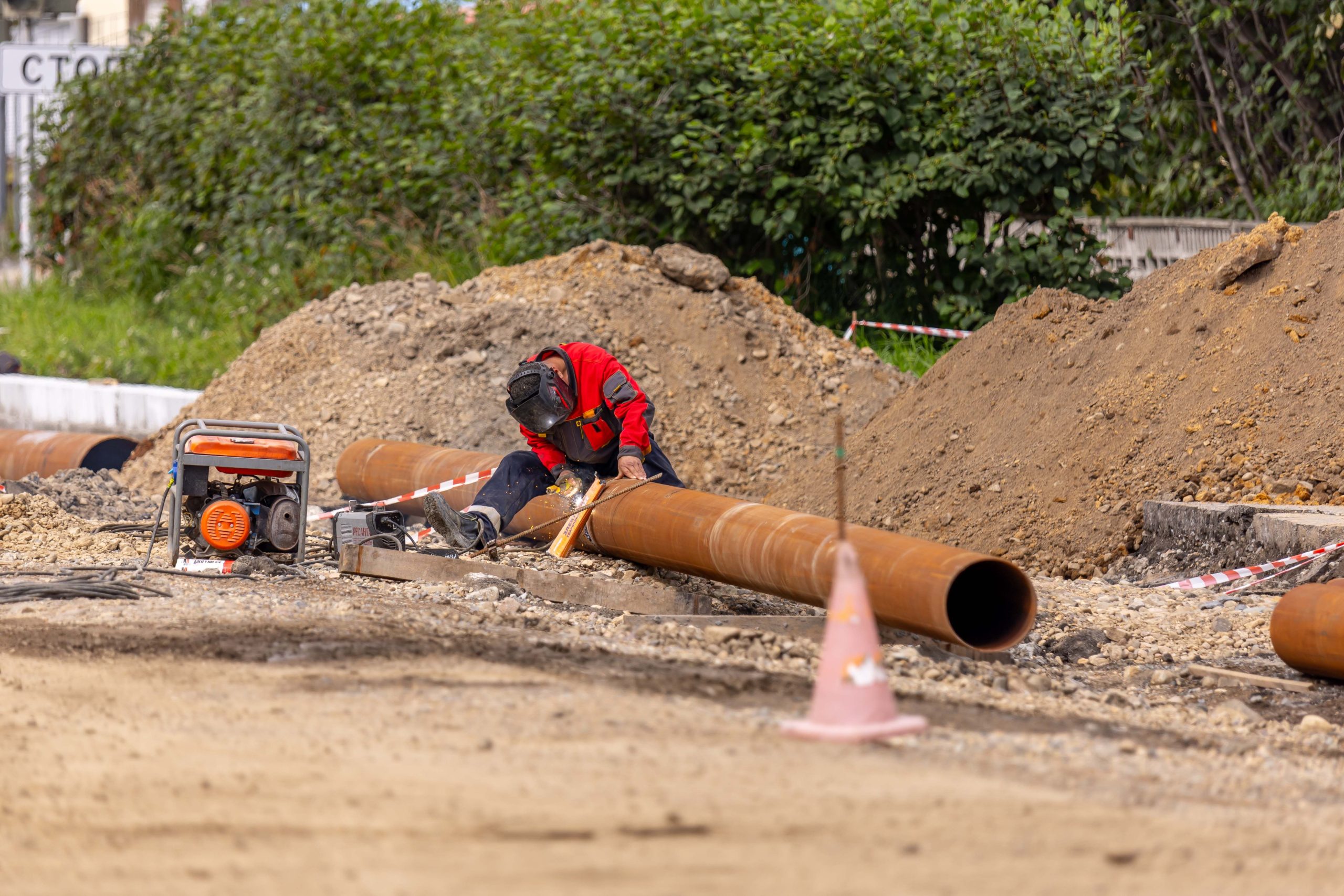
Excavation is not automatically a disaster. Our underground excavation service keeps the dig area tight by using camera locating to pinpoint depth and position before breaking ground.
The Step That Decides Everything
You cannot make this call from the surface. A sewer camera inspection is the only way to see pipe material, wall condition, joint alignment, slope, and the exact location and length of the damage.
Modern equipment records the footage and marks problem locations with a surface transmitter. That means you get evidence rather than an opinion, which also gives you something concrete to compare across quotes.
Be cautious with any plumbing contractor who recommends full replacement for sewer line repair in Northbrook without showing you video. The two options differ enormously in price, and the recommendation should come with proof.
Comparing Cost, Time, and Disruption
Lining typically costs less overall once restoration is included. The pipe work itself may be similar in price per foot, but you are not paying to replace concrete, sod, sprinkler lines, or landscaping afterward.
Timeline favors lining strongly. Most lining jobs complete in one day. Excavation and replacement usually run several days depending on depth, soil, and what sits above the line.
Lifespan is comparable. Quality liners carry warranties around fifty years, and new PVC sewer pipe lasts a similar span. Neither is a temporary fix.
Permits and inspection apply to both. Northbrook requires them, and a legitimate plumbing company pulls them before starting.
A Hybrid Approach Often Works Best
Real sewer lines rarely fail uniformly. It is common to find one collapsed section near a tree while the rest of the run is simply cracked.
In those cases, spot excavation replaces the failed section and lining handles the remainder. You get a fully restored line without digging the entire path. This combination is now standard practice for sewer repair Northbrook crews perform and often produces the best value.
If the line has already backed up into the home, repair is only half the job. Sewer cleanup and backup service addresses sanitizing and damage alongside the pipe work, and routine drain line repair covers the smaller branch lines feeding the main.
Frequently Asked Questions
How long does sewer lining last?
Quality cured in place liners are rated for roughly fifty years, comparable to new PVC pipe, and most carry a manufacturer warranty.
Does lining reduce my pipe size?
Slightly, but the smooth interior usually improves flow enough to offset it. SPG Plumbing checks capacity during the camera inspection.
Can lining fix tree root damage?
Yes, when the pipe structure is intact. The seamless liner removes the joints roots use to enter, which prevents them from returning.
How long does the job take?
Most residential lining jobs finish in one day. Full replacement typically takes several days depending on depth and surface restoration.
Will my yard be dug up?
Lining usually needs only one or two small access pits. Full replacement requires a trench, though camera locating keeps it as narrow as possible.
Does insurance cover sewer line repair?
Standard policies often exclude the buried line, but many carriers offer a service line endorsement. Documented video from SPG Plumbing supports your claim.
Can every sewer line be lined?
No. Collapsed pipes, severe sags, and lines needing a size increase require excavation and replacement.
Know Exactly What Your Sewer Line Needs — Before You Pay for It
Your pipe already knows what’s wrong. A short video inspection brings the answer to the surface — no guesswork, no unnecessary digging. That one step is the difference between a manageable one-day fix and a full excavation you didn’t need.
SPG Plumbing inspects, lines, and replaces sewer lines throughout Northbrook and nearby communities. Call us today to see what’s really happening underground before you approve any work.


